How Much Money Can You Gift Someone Tax Free
If I accept have-home pay of, say, $2,000 a month, how can I pay for housing, food, insurance, health care, debt repayment and fun without running out of money? That's a lot to cover with a express amount, and this is a goose egg-sum game.
The answer is to make a budget.
What is a upkeep? A budget is a plan for every dollar you have. It's non magic, but information technology represents more financial freedom and a life with much less stress. Here'south how to prepare and so manage your budget.
How to budget coin
-
Summate your monthly income, pick a budgeting method and monitor your progress.
-
Try the fifty/30/twenty rule as a simple budgeting framework.
-
Allow up to l% of your income for needs.
-
Leave xxx% of your income for wants.
-
Commit 20% of your income to savings and debt repayment.
-
Track and manage your budget through regular check-ins.
Understand the budgeting procedure
Figure out your subsequently-tax income: If y'all get a regular paycheck, the amount you receive is probably information technology, but if you have automatic deductions for a 401(m), savings, and wellness and life insurance, add together those dorsum in to give yourself a truthful pic of your savings and expenditures. If you have other types of income — perhaps you make coin from side gigs — subtract anything that reduces it, such as taxes and business expenses.
Cull a budgeting program: Any budget must encompass all of your needs, some of your wants and — this is key — savings for emergencies and the hereafter. Budgeting program examples include the envelope organisation and the zippo-based budget .
Automate your savings: Automate as much as possible so the money you've allocated for a specific purpose gets there with minimal effort on your part. An accountability partner or online back up group tin assistance, and then that you lot're held accountable for choices that blow the budget.
Practice budget management: Your income, expenses and priorities will change over fourth dimension, so actively manage your budget by revisiting it regularly, perhaps once a quarter. If you're struggling to stick with your plan, effort these budgeting tips .
Before you lot build a budget
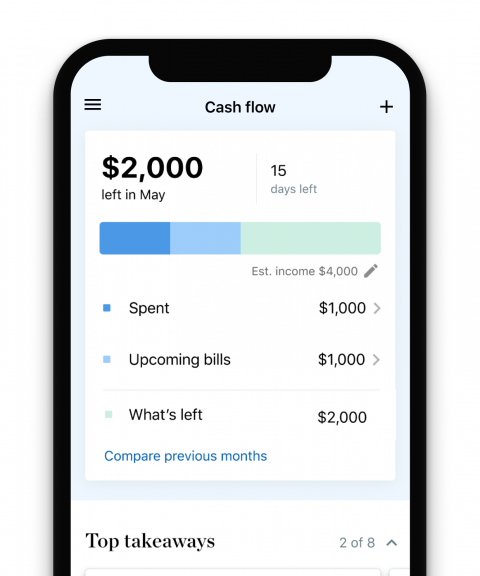
NerdWallet breaks down your spending and shows you ways to salve.
Frequently asked questions
How exercise you make a upkeep spreadsheet?
Start by determining your take-home (net) income, then have a pulse on your current spending. Finally, apply the 50/30/20 budget principles : 50% toward needs, 30% toward wants and 20% toward savings and debt repayment.
How exercise you keep a upkeep?
The key to keeping a budget is to track your spending on a regular basis and then yous can get an accurate picture of where your money is going and where you'd like information technology to become instead. Here's how to get started: ane. Cheque your account statements. 2. Categorize your expenses. 3. Keep your tracking consistent. four. Explore other options. five. Identify room for change. Costless online spreadsheets and templates can make budgeting easier.
How do y'all effigy out a budget?
Start with a financial cocky-cess. Once you know where yous stand and what yous promise to accomplish, choice a budgeting arrangement that works for you. Nosotros recommend the l/xxx/20 organization, which splits your income beyond 3 major categories: fifty% goes to necessities, thirty% to wants and 20% to savings and debt repayment.
How do yous make a upkeep spreadsheet?
Start by determining your accept-home (net) income, and so accept a pulse on your current spending. Finally, apply the l/30/20
upkeep principles
: fifty% toward needs, 30% toward wants and 20% toward savings and debt repayment.
How do y'all proceed a budget?
The key to keeping a budget is to
track your spending
on a regular ground so you can become an authentic picture of where your money is going and where you'd like information technology to become instead. Here's how to get started: 1. Check your account statements. 2. Categorize your expenses. 3. Proceed your tracking consistent. 4. Explore other options. 5. Identify room for modify. Free
online spreadsheets and templates
tin can brand budgeting easier.
How do you figure out a upkeep?
Get-go with a financial self-cess. Once you know where you stand and what y'all hope to achieve, pick a
budgeting system
that works for you. We recommend the l/30/20 system, which splits your income across iii major categories: 50% goes to necessities, 30% to wants and 20% to savings and debt repayment.
Try a simple budgeting programme
We recommend the pop 50/30/20 upkeep to maximize your money . In it, you lot spend roughly l% of your after-tax dollars on necessities, no more than 30% on wants, and at least 20% on savings and debt repayment.
We like the simplicity of this plan. Over the long term, someone who follows these guidelines volition have manageable debt, room to indulge occasionally, and savings to pay irregular or unexpected expenses and retire comfortably.
The l/30/20 budget
Detect out how this budgeting approach applies to your money.
Your l/30/xx numbers:
Savings and debt repayment
$0
Do yous know your "want" categories?
Rails your monthly spending trends to suspension down your needs and wants.
Allow upwards to 50% of your income for needs
Your needs — almost fifty% of your afterwards-tax income — should include:
-
Groceries.
-
Housing.
-
Basic utilities.
-
Transportation.
-
Insurance.
-
Minimum loan payments. Annihilation beyond the minimum goes into the savings and debt repayment category.
-
Child care or other expenses you demand so you can work.
If your absolute essentials overshoot the 50% marking, you may demand to dip into the "wants" portion of your budget for a while. Information technology's non the end of the earth, simply y'all'll accept to adjust your spending.
Leave 30% of your income for wants
Separating wants from needs can be difficult. In general, though, needs are essential for you to live and piece of work. Typical wants include dinners out, gifts, travel and amusement.
It's not always piece of cake to decide. Are restorative spa visits (including tips for a massage ) a want or a need? How about organic groceries? Decisions vary from person to person.
If you're eager to get out of debt as fast as yous can, you may determine your wants can wait until yous take some savings or your debts are nether control. Just your upkeep shouldn't be so austere that you can never buy annihilation just for fun.
Every budget needs both wiggle room — perchance yous forgot about an expense or one was bigger than you predictable — and some money you lot're entitled to spend as yous wish.
Your budget is a tool to help y'all, not a straitjacket to go along you lot from enjoying life, ever. If in that location's no money for fun, you'll be less likely to stick with your budget — and a good budget is one you'll stick with.
Commit 20% of your income to savings and debt repayment
Use 20% of your after-tax income to put something away for the unexpected, save for the futurity and pay off debt. Make sure y'all think of the bigger financial picture; that may mean 2-stepping betwixt savings and debt repayment to attain your most pressing goals.
Priority No. one is a starter emergency fund.
Many experts recommend you lot effort to build upwardly several months of bare-bones living expenses. We suggest you outset with an emergency fund of at to the lowest degree $500 — plenty to cover small emergencies and repairs — and build from there.
Y'all can't get out of debt without a way to avoid more debt every time something unexpected happens. And you'll slumber better knowing you have a financial cushion.
Priority No. 2 is getting the employer match on your 401(k).
Get the like shooting fish in a barrel coin first. For most people, that means tax-advantaged accounts such as a 401(k). If your employer offers a lucifer, contribute at to the lowest degree plenty to grab the maximum. Information technology's free money.
Why do we make capturing an employer match a college priority than debts? Because y'all won't get another gamble this big at free money, tax breaks and compound interest. Ultimately, you have a ameliorate shot at building wealth by getting in the habit of regular long-term savings.
Yous don't get a 2d chance at capturing the power of compound interest . Every $one,000 you don't put away when you're in your 20s could be $20,000 less you lot have at retirement .
Priority No. 3 is toxic debt.
Once you've snagged a match on a 401(thousand), if available, get after the toxic debt in your life: loftier-interest credit menu debt, personal and payday loans, championship loans and hire-to-own payments. All carry interest rates so high that you end up repaying two or three times what y'all borrowed.
If either of the following situations applies to you, investigate options for debt relief , which can include bankruptcy or debt management plans :
You can't repay your unsecured debt — credit cards, medical bills, personal loans — within five years, fifty-fifty with drastic spending cuts.
Your unpaid unsecured debt, in full, equals one-half or more of your gross income.
Priority No. 4 is, once more, saving for retirement.
Once y'all've knocked off whatever toxic debt, the adjacent job is to get yourself on runway for retirement. Aim to save xv% of your gross income; that includes your company friction match, if at that place is ane. If you're immature, consider funding a Roth private retirement account afterward you capture the visitor friction match. Once you hit the contribution limit on the IRA, return to your 401(m) and maximize your contribution there.
Priority No. v is, once again, your emergency fund.
Regular contributions tin help you build up 3 to six months' worth of living expenses. Yous shouldn't wait steady progress considering emergencies happen, merely at least y'all'll be able to manage them.
Priority No. 6 is debt repayment.
If you lot've already paid off your about toxic debt, what'south left is probably lower-rate, often revenue enhancement-deductible debt (such every bit your mortgage). Y'all should tackle these only after you've gotten your other financial ducks in a row.
Any wiggle room you have here comes from the coin available for wants or from saving on your necessities, non your emergency fund and retirement savings.
Congratulations! You're in a great position — a really swell position — if yous've built an emergency fund, paid off toxic debt and are socking away 15% toward a retirement nest egg. You've built a habit of saving that gives y'all immense fiscal flexibility. Don't surrender now.
If you lot've reached this happy point, consider saving for irregular expenses that aren't emergencies, such as a new roof or your side by side auto. Those expenses volition come up no matter what, and it's better to save for them than borrow.
Sentinel TO Larn More than Almost BUDGETING FOR YOUR FINANCIAL VALUES
Source: https://www.nerdwallet.com/article/finance/how-to-budget
0 Response to "How Much Money Can You Gift Someone Tax Free"
Post a Comment